A. TAIWAN EXPERIENCE EDUCATION PROGRAMM (TEEP)
The Taiwan Experience Education Program (TEEP) is an international education initiative supported by Taiwan’s Ministry of Education (MOE) that provides international students with opportunities to gain hands-on academic, research, and professional experience at universities and research institutions in Taiwan. The program combines short-term research or internship activities with exposure to Taiwan’s academic environment and culture. Through TEEP, participants can strengthen their research and professional competencies, experience international laboratory and academic settings, build cross-cultural communication skills, and expand their global academic networks.

During the Taiwan Experience Education Program (TEEP) at Chang Gung University, the student participated in a three-month research internship involving hands-on laboratory activities, including the preparation of Luria-Bertani (LB) medium, SDS gel preparation, and Bradford assays under the supervision of a doctoral student. Beyond laboratory research, the student also engaged in academic and cultural activities, including the PPI Taiwan National Dialogue, Chang Gung University Sport Day 2025, an international bazaar, and Indonesian student community activities. These experiences provided opportunities to develop laboratory skills, cross-cultural communication, independence, and international academic networking.

|
| |||
|
|||
B. SEA TEACHER, CAPIZ STATE UNIVERSITY (CAPSU), FILIPINA
The SEA-Teacher (Southeast Asia Teacher Project) is a student exchange program for pre-service teachers in Southeast Asia that provides opportunities for students to gain international teaching experience. In this program, a student participated in the SEA-Teacher program for one month at Capiz State University (CAPSU) Burias Campus, Philippines.
During the program, the student conducted teaching practice at Mambusao National High School (MNHS), including classroom observation and assisting teachers in the teaching and learning process. The student also had the opportunity to learn about the local culture and community life in the Philippines.
Through this student exchange activity, the participant gained valuable international experience in developing teaching skills, communication abilities, and global perspectives as a future educator.


C. INTERNATIONAL CREDIT TRANSFER MALAYSIA


Student Exchange Program at Universiti Malaya
The International Credit Transfer Program is part of the academic collaboration between Surabaya State University (Unesa) and Universiti Malaya (UM). This program supports the internationalization of higher education and enhances students’ global competence through one semester of offline study in Kuala Lumpur, Malaysia.
Participants are selected based on academic excellence (minimum GPA 3.5) and English proficiency (TOEFL ≥ 500). During the program, students take 14–20 credits aligned with the agreed curriculum. As one of the leading universities in Asia, Universiti Malaya provides a strong academic environment, advanced facilities, and a multicultural learning atmosphere.
Academic Experience
During the exchange program, students gain valuable academic exposure through interactive and practice-oriented courses. Learning activities include classroom discussions, field observations, lesson planning, and implementation of innovative teaching strategies. The experience strengthens both pedagogical competence and cross-cultural academic understanding.
Non-Academic Experience
Beyond academics, the program offers rich intercultural experiences. Living in Kuala Lumpur allows students to engage with Malaysia’s diverse cultures and international student community. Participation in cultural events, campus activities, and social interactions fosters adaptability, global networking, and personal growth.
Impact
The student exchange program contributes significantly to the development of hard skills and soft skills, broadens international perspectives, and encourages continuous self-development. This experience supports the vision of producing globally competitive graduates who are ready to contribute to national and international development.
D. PROGRAM STUDENT EXCHANGE KE UNIVERSITAS KHON KAEN, THAILAND
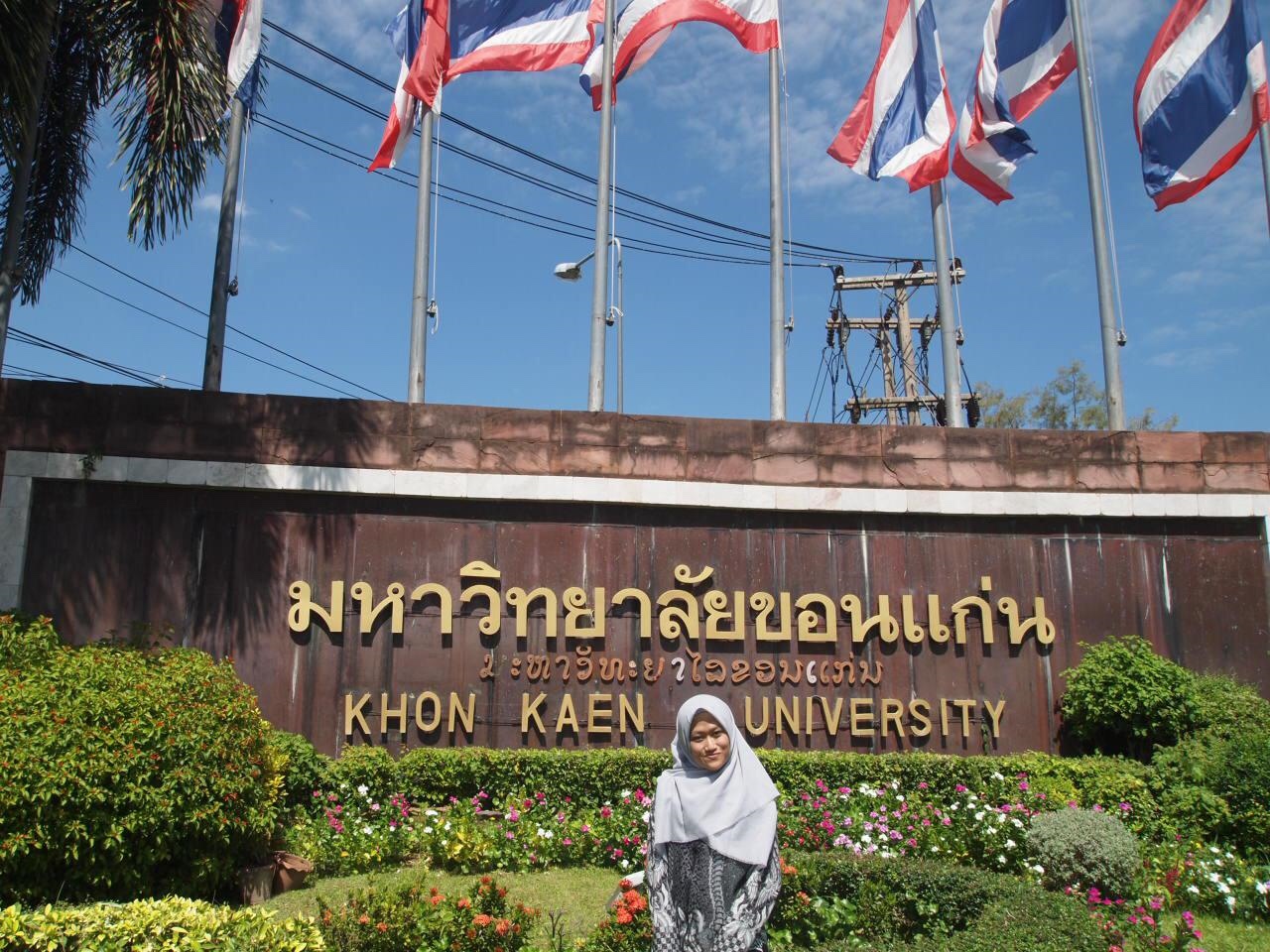
The Student Exchange Program to Khon Kaen University (KKU), Thailand, is part of the international academic collaboration of Surabaya State University (Unesa). This program aims to strengthen global engagement, academic quality, and cross-cultural competence through one semester of study abroad.
Participants are selected based on academic performance and English proficiency, and they undertake courses aligned with the curriculum agreement between both universities. As one of Thailand’s leading public universities, Khon Kaen University offers a dynamic academic environment supported by modern facilities and international partnerships.
Academic Experience
Through this program, students engage in interactive lectures, collaborative projects, laboratory activities, and academic discussions in an international classroom setting. The learning process emphasizes critical thinking, research skills, innovation, and interdisciplinary collaboration. Exposure to different teaching methods and academic cultures enhances both subject mastery and pedagogical competence.
Non-Academic Experience
Living in Thailand provides meaningful intercultural experiences. Students interact with peers from various countries, participate in cultural exchange activities, and experience Thai traditions, language, and local community life. Campus organizations and student activities further enrich leadership skills, adaptability, and global networking.
Impact
The program significantly develops students’ hard skills and soft skills, broadens international perspectives, and strengthens global collaboration networks. This experience supports continuous self-development and prepares graduates to be globally competitive while contributing positively to society and national development.
